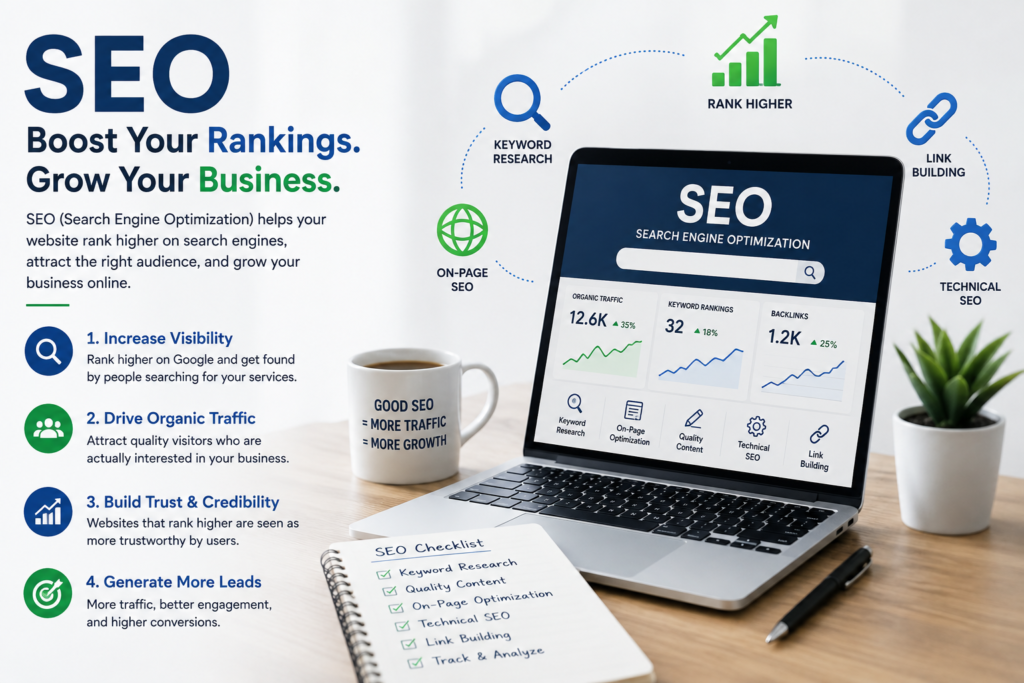

In today’s digital world, having a website is not enough. Your potential customers need to find your business when they search online. This is where SEO Skills become valuable. Search Engine Optimization helps businesses improve their visibility on search engines, attract relevant visitors, build credibility, and create more opportunities for growth.
Whether you run a small business, online store, startup, or established company, developing the right SEO Skills can help you compete more effectively in the digital marketplace.
| SEO Skill | What It Does | Main Goal |
|---|---|---|
| Keyword Research | Finds relevant keywords your customers search for. | Target the right searches |
| On-Page SEO | Optimizes titles, headings, content, URLs, and images. | Improve page visibility |
| Technical SEO | Improves speed, crawling, indexing, mobile performance, and site structure. | Make the website search-engine friendly |
| Content SEO | Creates useful and relevant content around search intent. | Attract organic traffic |
| Off-Page SEO | Builds website authority through quality backlinks and mentions. | Increase website credibility |
| Link Building | Earns relevant links from trustworthy websites. | Strengthen authority |
| Local SEO | Optimizes a business for local searches and Google Maps. | Attract local customers |
| E-commerce SEO | Optimizes product pages, categories, and online stores. | Increase organic sales |
| Image SEO | Optimizes image size, filenames, formats, and alt text. | Improve visibility and performance |
| SEO Analytics | Tracks rankings, traffic, conversions, and SEO performance. | Measure and improve results |
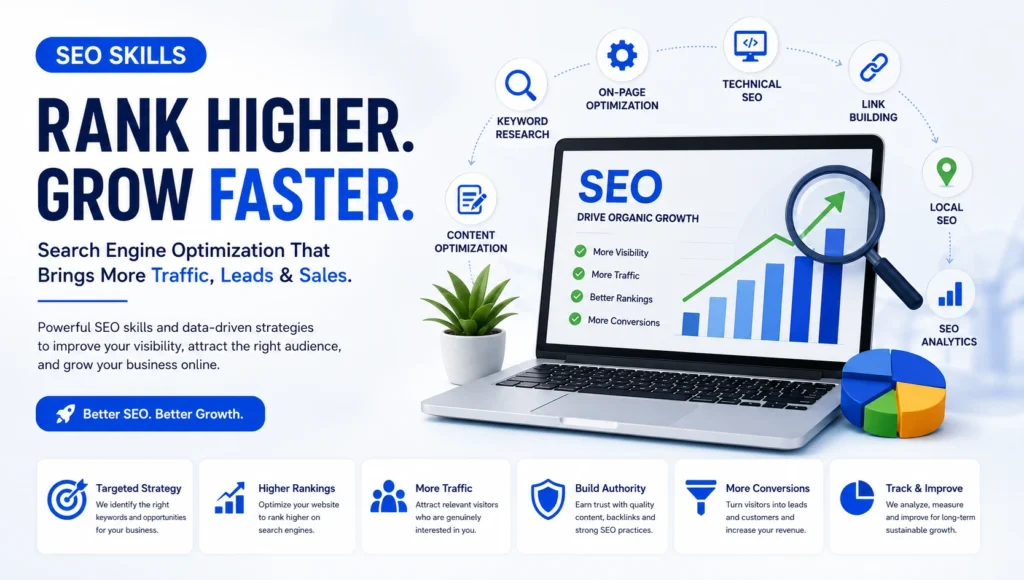
1. What Are SEO Skills?
SEO Skills are the knowledge and techniques used to improve a website’s visibility in organic search results. SEO involves understanding how search engines work, what people search for, and how to create a website that provides a useful experience.
Important SEO Skills include:
- Keyword research
- On-page SEO
- Technical SEO
- Content optimization
- Link building
- Local SEO
- Competitor research
- SEO analytics
- Website performance optimization
These skills work together to create a complete SEO strategy rather than focusing on only one part of a website.
2. Why SEO Skills Matter for Your Business
Search engines are often the starting point when people are looking for products, services, information, or local businesses. If your website appears for relevant searches, you have a better opportunity to connect with potential customers.
Strong SEO Skills can help your business:
Sure! Here are brief, website-friendly descriptions for each point:
- Increase Organic Website Traffic — Attract more visitors to your website through unpaid search results.
- Improve Search Engine Visibility — Help your website appear higher for relevant searches on Google and other search engines.
- Reach a More Relevant Audience — Target keywords and topics that match what your potential customers are looking for.
- Build Brand Credibility — A strong search presence and useful content can help your business appear more trustworthy and professional.
- Generate Potential Leads — Bring interested visitors to your website who may contact your business or purchase your products and services.
- Support Long-Term Online Growth — Consistent SEO work can create sustainable visibility, traffic, and business opportunities over time.
Unlike paid advertising, organic SEO focuses on earning visibility through useful content, technical improvements, and website authority. SEO takes time, but consistent work can create lasting value.
3. Keyword Research
Keyword research is one of the most important SEO Skills. It involves finding the words and phrases your target audience uses when searching for information, products, or services.
For example, a digital marketing agency might target keywords such as “digital marketing services,” “SEO services,” or “content writing services.”
Good keyword research considers:
- Search Intent — Understand what the user actually wants when searching for a keyword.
- Keyword Relevance — Choose keywords that are closely related to your products, services, and audience.
- Search Volume — Check how often people search for a particular keyword.
- Competition — Analyze how difficult it may be to rank for the keyword.
- Long-Tail Keywords — Target specific, longer search phrases that often have clearer intent and less competition.
- Business Goals — Select keywords that can support your objectives, such as traffic, leads, sales, or brand awareness.
The goal is not to use as many keywords as possible. Instead, businesses should choose relevant keywords that match what their audience actually wants to find.
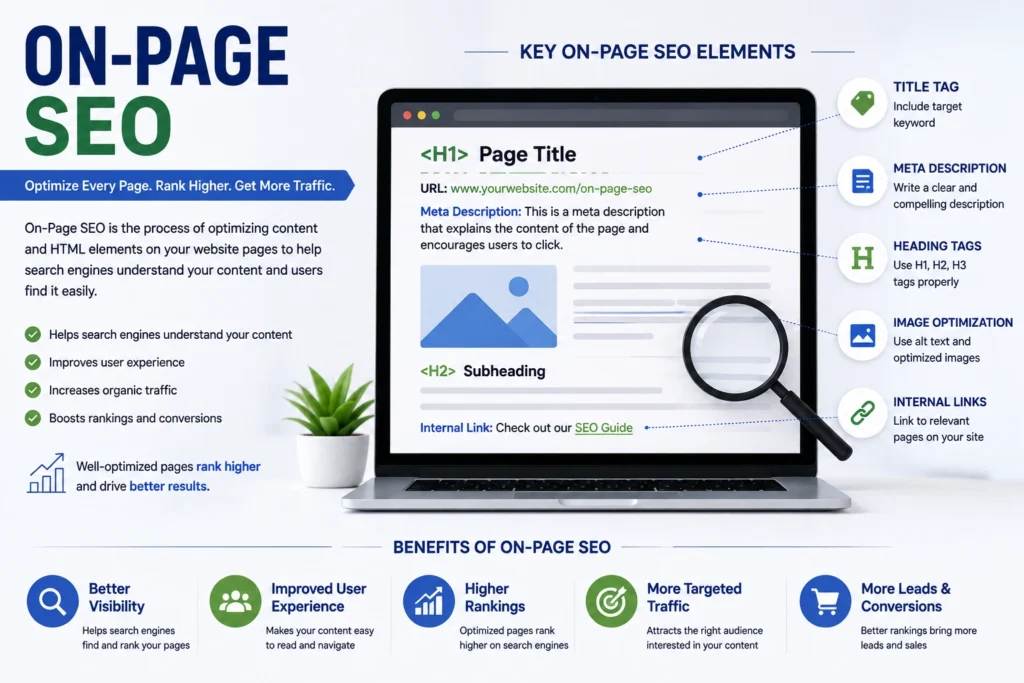
4. On-Page SEO
On-page SEO focuses on optimizing individual pages of a website. It helps search engines understand the subject of a page while also making the content easier for visitors to read.
Important on-page SEO Skills include optimizing:
- Page Titles — Create clear, keyword-focused titles that tell search engines and users what the page is about.
- Meta Descriptions — Write concise descriptions that explain the page and encourage users to click.
- Headings — Use H1, H2, and H3 headings to organize content and make it easier to understand.
- URLs — Keep URLs short, descriptive, and relevant to the page topic.
- Website Content — Create original, useful, and easy-to-read content that answers users’ questions.
- Images & Alt Text — Optimize images for speed and use descriptive alt text to help search engines understand them.
- Internal Links — Link related pages together to help users navigate your website and search engines discover content.
- Keyword Placement — Use relevant keywords naturally in important areas without overusing or stuffing them.
Good on-page SEO should feel natural. Content should be written primarily for people while using relevant search terms appropriately.
5. Technical SEO
Technical SEO focuses on the technical foundation of a website. Even excellent content may struggle to perform if search engines cannot properly crawl, understand, or index the website.
Technical SEO Skills can include improving:
- Website Loading Speed — Improve page loading times to provide a faster and smoother user experience.
- Mobile Usability — Make sure your website works properly and is easy to use on smartphones and tablets.
- Site Security — Protect your website and visitors by using HTTPS and maintaining proper security practices.
- XML Sitemaps — Help search engines discover and understand the important pages on your website.
- Robots.txt — Tell search engine crawlers which areas of your website they should or should not access.
- Broken Links — Find and fix links that lead to missing or unavailable pages.
- URL Structure — Create simple, descriptive, and search-friendly URLs that clearly indicate page topics.
- Core Web Vitals — Improve key page experience metrics related to loading performance, responsiveness, and visual stability.
- Indexing Issues — Identify and fix problems that prevent search engines from properly adding your pages to their index.
A technically healthy website provides a better experience for both search engines and users.
6. Content SEO
Content is an important part of successful SEO. Businesses need to create information that genuinely helps their target audience.
Strong content SEO Skills involve understanding what users want and creating content that answers their questions clearly.
Useful content can include:
- Blog Posts — Provide useful information, answer customer questions, and target relevant search keywords.
- Service Pages — Explain your services clearly and help potential customers understand how you can solve their needs.
- How-to Guides — Give step-by-step instructions that help users solve specific problems.
- FAQs — Answer common customer questions and provide quick, useful information.
- Product Descriptions — Explain product features, benefits, and details while helping customers make buying decisions.
- Industry Resources — Share valuable guides, research, statistics, and insights related to your industry.
- Case Studies — Show real examples of your work, results, and how your services helped customers achieve their goals.
Regularly publishing valuable content can help a website target more relevant searches and establish expertise in its industry.
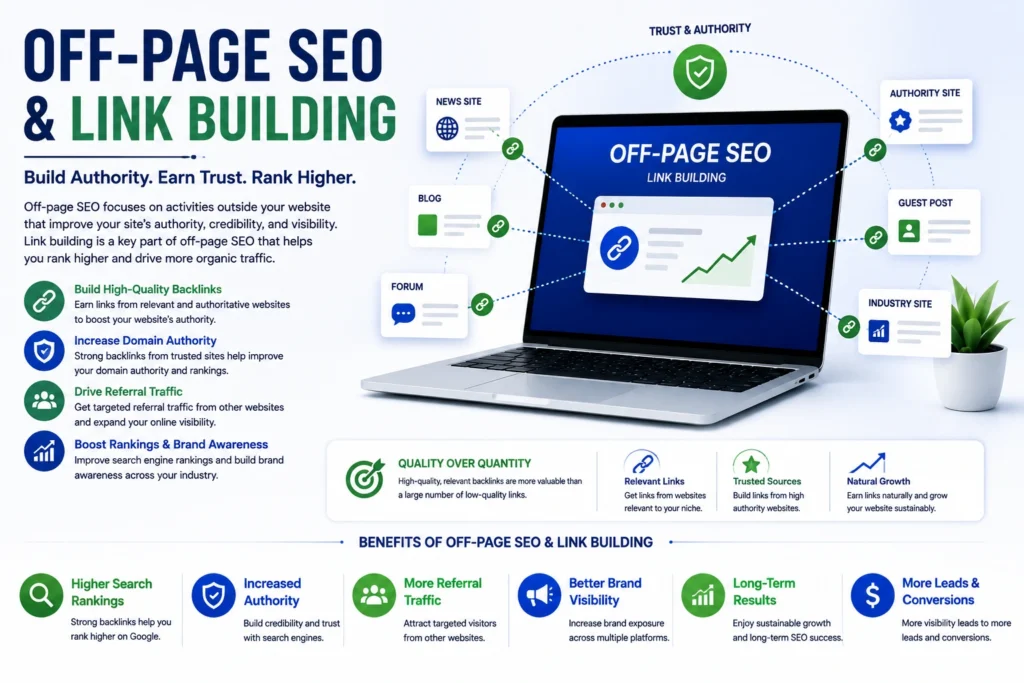
7. Off-Page SEO and Link Building
Off-page SEO focuses on activities that happen outside your website. One important area is earning quality backlinks from relevant and trustworthy websites.
Backlinks can help search engines understand that other websites find your content useful or valuable. However, quality is more important than simply collecting a large number of links.
Effective SEO Skills for off-page optimization can include digital PR, content promotion, relationship building, relevant business listings, and earning natural mentions from other websites.
8. Local SEO
For businesses serving a specific location, local SEO can be extremely valuable. Local SEO Skills help businesses become more visible when people search for nearby products and services.
Local SEO Skills can include:
- Optimizing Your Google Business Profile — Keep your profile complete, accurate, and updated to improve visibility in local searches.
- Using Relevant Local Keywords — Include location-based keywords that match what nearby customers are searching for.
- Maintaining Accurate Business Information — Keep your business name, address, phone number, website, and opening hours consistent.
- Managing Customer Reviews — Encourage genuine reviews and respond professionally to customer feedback to build trust.
- Creating Useful Local Content — Publish content focused on local topics, services, events, and customer needs.
- Building Relevant Local Citations — List your business on trustworthy local directories and platforms with consistent information.
A strong local SEO strategy can help businesses connect with customers who are ready to visit, call, or make an inquiry.
9. Measure SEO Performance
SEO should not be based on guesswork. Businesses need to monitor performance and understand which strategies are producing results.
Useful SEO measurements include:
- Organic Traffic — Measures how many visitors reach your website through unpaid search results.
- Keyword Rankings — Shows where your website appears in search results for targeted keywords.
- Click-Through Rate (CTR) — Measures the percentage of people who click your website after seeing it in search results.
- Conversions — Tracks valuable actions such as purchases, form submissions, bookings, or sign-ups.
- Leads — Measures potential customers who contact your business or show interest in your products or services.
- Engagement — Shows how visitors interact with your website, such as time spent on pages and pages viewed.
- Indexed Pages — Shows how many of your website pages have been discovered and included in a search engine’s index.
- Backlinks — Measures links from other websites to your website, which can help build authority and credibility.
Analytics help identify what is working and where improvements are needed. This makes data analysis an important part of professional SEO Skills.
10. How SEO Helps Your Business Grow
The ultimate purpose of SEO is not simply to achieve higher rankings. The real goal is to attract the right people and help turn website visitors into customers.
When businesses combine keyword research, technical optimization, valuable content, on-page improvements, link building, and performance tracking, they can create a stronger online presence.
Good SEO Skills can help your business:
- Reach Potential Customers — Connect with people actively searching for your products or services.
- Increase Organic Traffic — Bring more relevant visitors to your website without relying only on paid ads.
- Improve Search Visibility — Help your website appear more prominently in relevant Google searches.
- Build Trust & Credibility — Establish your brand as reliable through useful content and a strong search presence.
- Generate More Leads — Turn relevant website visitors into inquiries and potential customers.
- Improve User Experience — Make your website faster, easier to navigate, and more useful for visitors.
- Increase Brand Awareness — Help more people discover and recognize your business online.
- Reach Local Customers — Use Local SEO to connect with customers searching for businesses in specific locations.
- Improve Keyword Rankings — Help your pages rank better for relevant search terms.
- Support Long-Term Growth — Build sustainable traffic, visibility, leads, and business opportunities over time.
Conclusion
Search Engine Optimization is an ongoing process that requires strategy, consistency, analysis, and continuous improvement. The right SEO Skills can help businesses understand their audience, improve their websites, create valuable content, and compete for important search terms.
SEO is not about making a few quick changes and expecting instant results. Search engines consider many factors when determining which pages should appear in search results. This is why businesses need a complete approach that includes keyword research, on-page optimization, technical SEO, content creation, link building, local SEO, and performance tracking.
Strong SEO Skills also help businesses understand what their customers are looking for. By creating useful content and providing a smooth website experience, businesses can attract visitors who are genuinely interested in their products or services.
Another important part of SEO is measuring results. Tracking organic traffic, keyword rankings, conversions, leads, and other performance metrics helps businesses understand what is working and where improvements are needed. Regular analysis allows an SEO strategy to become more effective over time.
Most importantly, SEO focuses on building a strong digital foundation for the future. Consistent optimization can help improve online visibility, increase qualified traffic, build brand credibility, and create new business opportunities.
With patience, quality content, technical improvements, and the right SEO Skills, your website can continue attracting relevant visitors and supporting sustainable business growth for the long term.
Investing in SEO Skills means investing in better visibility, stronger customer connections, and sustainable online business growth.